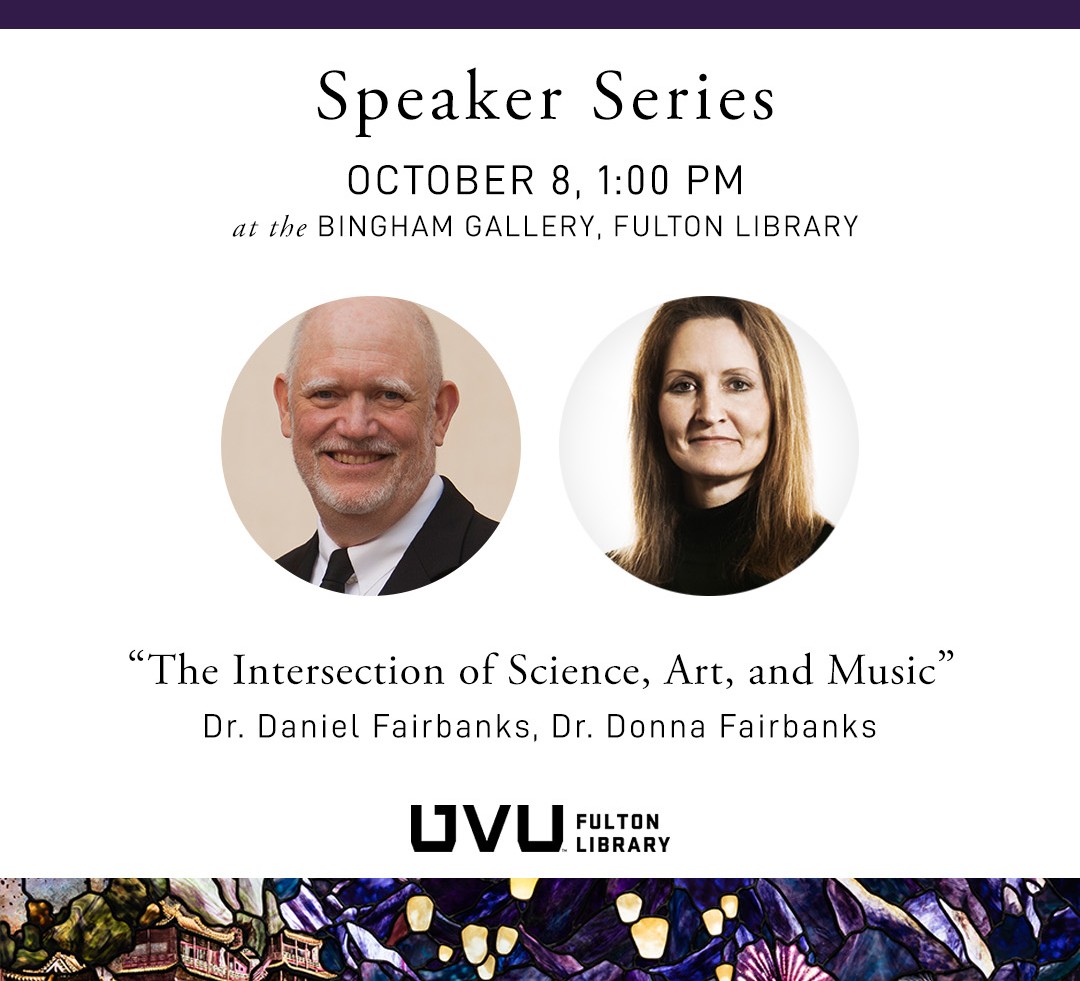
Science, art, and music are interwoven themes throughout the Roots of Knowledge windows. Many of the key contributors to world history, whose works are represented in the windows, connected the sciences and arts in ways that are not as prevalent in the twenty-first century. In this presentation, we will highlight several of those instances with live performances of music and art.
More about the Presenter
Dr. Daniel Fairbanks is Professor of Biology and University Research Officer at UVU. He is a geneticist specializing in evolutionary genetics, the history of genetics, plant genetics and breeding, and international scientific development. He is author or co-author of six scholarly books and more than sixty scientific journal articles on genetics, human evolutionary genetics, the history of genetics, plant genetics and breeding, and science education. He is recognized as one of the foremost scholars on Gregor Mendel, the founder of genetics, and is recipient of the Gregor Mendel Memorial Medal from the Moravian Museum in Brno, Czech Republic, where Mendel conducted his famous scientific research. He also is an accomplished artist, with sculptures, paintings, drawings, and scientific illustrations in museums, public and private collections, and publications in the United States, Latin America, and Europe.
Dr. Donna Fairbanks is Professor of Music at UVU. As a performing and recording violinist, she has released several published CDs with the labels Albany Records, MSR Classics, 4TAY Records, and Tantara Records. Reviewers praise her “great precision” (Fanfare), “delicacy and fire” (Grammophone), and her performances as “very convincing and pristine” (ConcertoNet), with “plenty of melodic beauty” (Atlanta Audio Club). Her recordings have been featured on major public radio stations, among them WNYC New York City, WFMT Chicago, WPRB Princeton, and the Beethoven Satellite Network. Her international recitals include performances in China, Brazil, Mexico, and Europe. She received the 2021 Utah-ASTA Teacher of the Year Award in recognition of her contributions to teaching. Her students have excelled in competitions, job placements, and graduate programs. She performs on a 1747 violin by Lorenzo and Tomaso Carcassi.

Dr. Reyes' presentation introduces a new framework to strengthen intercultural understanding and engagement, the relationship between humanity and technology, and the development of greater empathy and connection across lines of difference. Through an exploration of four lenses, Dr. Reyes invites participants to be more intentional about developing the capacity for deep reflection, contextual understanding, empathy, and community-building.
More about the Presenter
Dr. Kyle A. Reyes currently serves as Vice President of Institutional Advancement at UVU. Before this appointment in October 2022, Dr. Reyes served as vice president of Student Affairs for five years and as UVU’s inaugural senior inclusion officer from 2014–2017. He has been at UVU for nearly 23 years in various offices and programs: TRIO Upward Bound, GEAR UP, Multicultural Student Services, Student Success & Retention, the School of Education, and the Office of the President. Dr. Reyes is also a tenured Associate Professor of Education at UVU. On October 1, 2024, Greenleaf Book Group published Dr. Reyes’s book, Lenses of Humanity: How Reflection, Connection, and Empathy Can Change Our World. Dr. Reyes has consulted with and presented to organizations in 35 states and Canada across a variety of sectors including K-12 education, higher education, business, community task forces, and faith groups. He has given more than 800 presentations over the past 19 years on issues of student success, leadership, humanity, inclusion, art, and cultural competence. In addition to serving on the Asian Pacific Americans in Higher Education board, Dr. Reyes has served on numerous national, regional, and state boards. He has received multiple national and state honors for his work on access and student success in higher education.
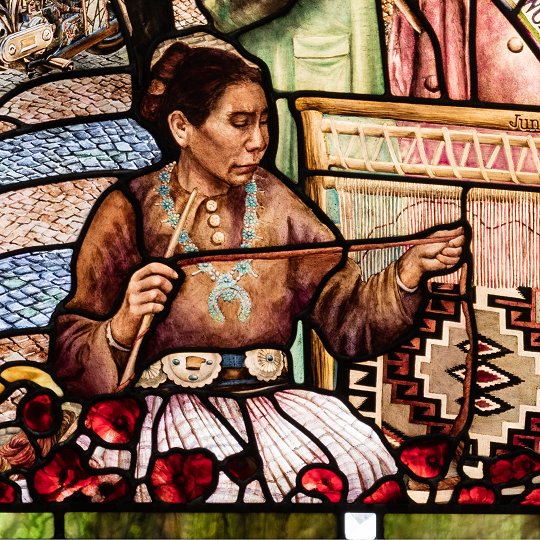
All are invited to attend this free themed tour of Roots of Knowledge. Faculty, students, and staff from across campus have prepared to present on topics they are experts in or have done recent research about. This month’s theme explores Native American History. Free popcorn for all and prizes for those who visit at least four stops along the tour. If you are interested in presenting at one of the stops in a themed tour please reach out.
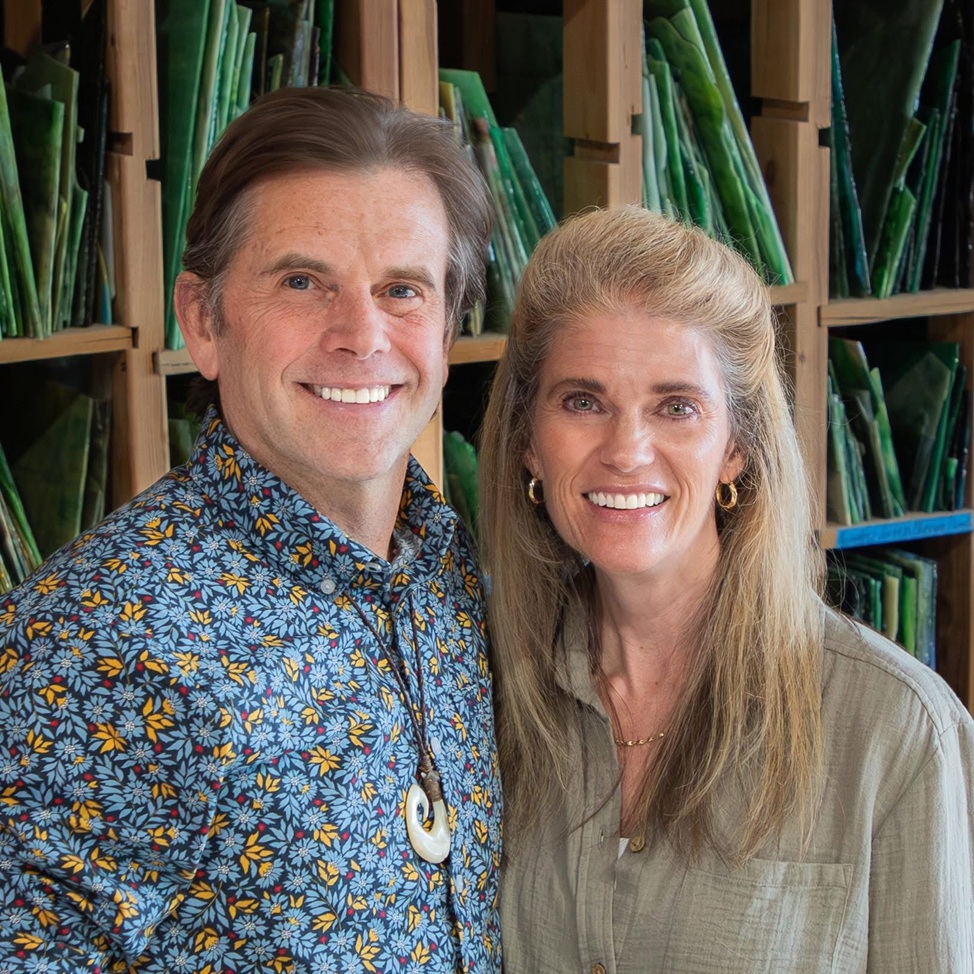
Roots of Knowledge creators, Tom and Gayle Holdman, will chronicle the intense and demanding, yet beautiful and refining collaborative process, from conception to completion, of this stunning world class glass art masterpiece.
More about the Presenter
Due to a lifelong speech impediment, Tom Holdman expresses his light best through art. He started “speaking” through glass professionally after returning home from a mission for The Church of Jesus Christ of Latter-day Saints, knocking on doors and creating stained glass in his parents’ garage. More than thirty years later, he and his wife, Gayle, lead a team of 130 artists. He has collaborated with and inspired artists in all fifty states and more than one hundred countries. Gayle Holdman is an award-winning author and designer, an international public speaker, BYU Education Week presenter, and a devoted mother and grandmother. She is co-owner of Holdman Studios with her husband, Tom, where they illuminate messages of God’s love and light through stained glass. Her writing focuses on describing the themes of their art as well as encouraging each human soul to understand their worth. Gayle has a bachelor’s degree in Family Science and Human Development, is certified in Applied Positive Psychology, and speaks fluent Spanish. Together, Tom and Gayle have been able to work on close to 200 temples for The Church of Jesus Christ of Latter-day Saints including the Rome, Paris, Orem, Payson, and Lindon locations. Roots of Knowledge led them toward their current efforts of creating the visionary and monumental Sphere of Light, a stunning center for inspiration and growth, which will focus on the light within all humanity.

